(913)-321-SEAL (7325)


Our Services
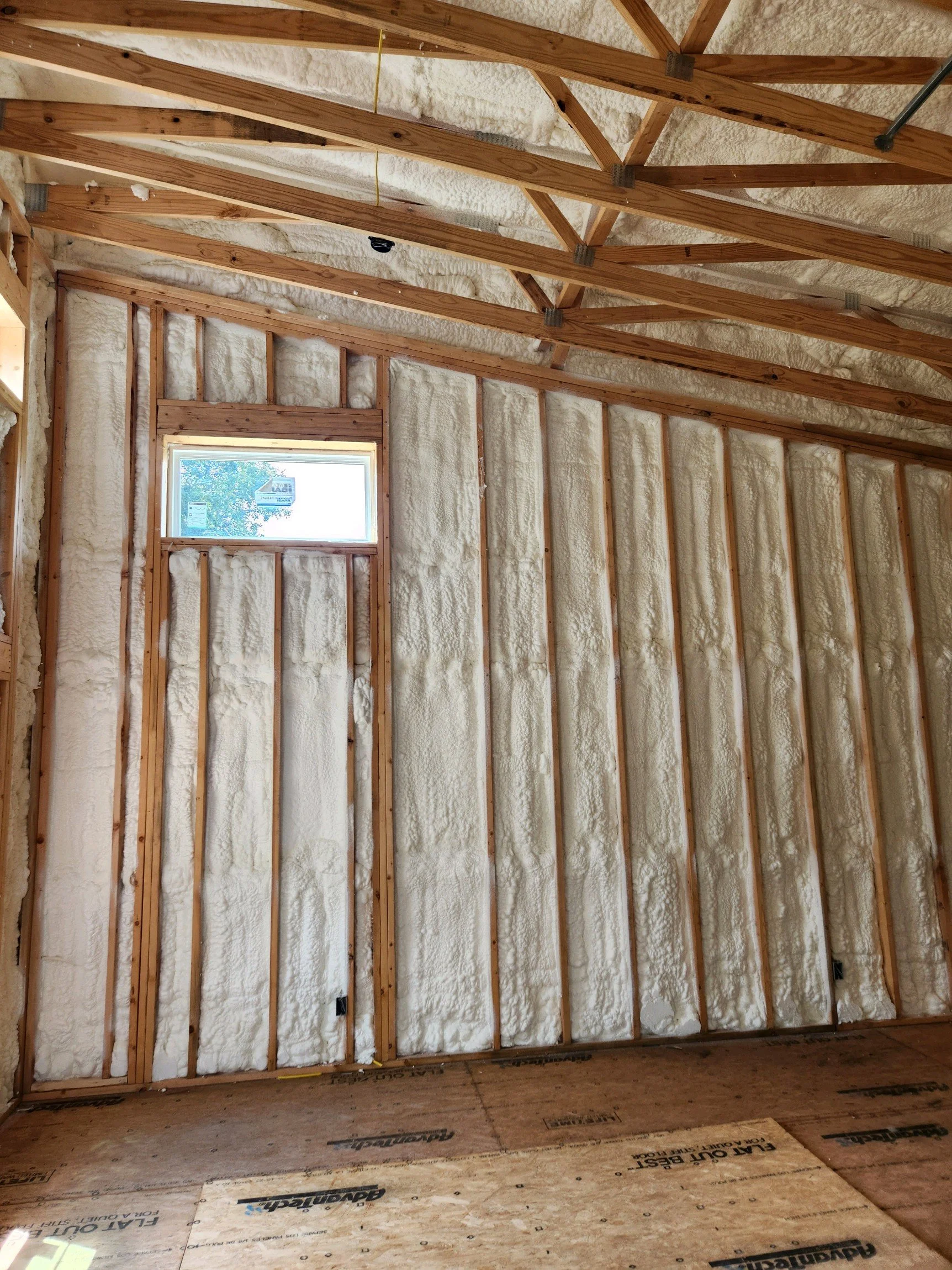
At EZ Seal Spray Foam LLC we offer both open and closed cell spray foam insulation. Insulate your new build today with insulation designed for optimal energy efficiency! Use the links below to check out the many benefits of both open and closed cell.
Open Cell Foam
Open cell spray foam’s name represents the product perfectly. During the manufacturing process, a lot of steam is produced. That steam forces its way out of the foam leaving a lot of broken or fractured cells behind. The resulting foam is typically softer, and more pliable. Think of these foams like a sponge. Their cell may be open, but at a certain thickness, they provide air sealing and insulation and are pretty good at sound attenuation. When open cell spray foam is exposed to enough vapor drive, it will absorb some moisture and vapor can pass through the foam as it seeks to find a condensing surface. Once it finds that surface the vapor can rot or compromise the durability of the structure. Because of this, the building code requires a class I or II vapor retarder to be placed on the interior side of vapor permeable insulation in zones 5 and higher. Check out Insulation Institute’s article on vapor retarders for more information on retarder use with insulation.
Here are a few more facts about open cell spray foam that will help you decide if this foam is right for your particular needs:
Open cell is 0.4-1.6lbs/cubic foot and typically have R-values from 3.5- 4.5 per inch and are 90% open cell content or higher.
Also referred to as low density foam.
Newer hybrid formulas, while still being considered open-cell formulations, have achieved R-values above 6/inch.
Designed for interior applications.
Prized for their ability to provide both insulation and air sealing in one application.
Because the cells are open, these foams are not vapor retarders.
Traditional open cell spray foam must be protected anywhere there is a potential for moisture to be present.
Higher-density hybrid products can be a vapor retarder when applied thick enough
Closed Cell Foam
Closed cell blends, on the other hand, have a gas that is used in their manufacturing process, and retaining that gas is part of the goal. Just like the gas in windows, trapping these gasses provides a higher R-value than trapping air. Additionally, since the cell walls are intact and tightly held together, the resulting foam is more dense and rigid. Closed cell foams have a similar feel to the dashboard in your car.
Closed cell foams dominate the market in northern climate zones because of the colder temperatures and vapor drive in the winter months.
They are used in almost any area including wall cavities, ceilings, unvented attic assemblies, oors, crawl spaces, and concrete walls.
Used when structural support, greater R-values, or eliminating vapor drive is needed.
Closed cell foams typically range from 1.7 – 3+lbs/cubic foot.
R-values range from 5.2- to over 7.2 per inch with a closed cell content of 90% or higher.
MEDIUM DENSITY CLOSED CELL:
Medium Density spray foam’s R-value ranges from 1.7 – 2+lbs/cubic foot.
Typically used in interior applications that call for maximum R-value’s or where cavity depth is limited.
HIGHEST DENSITY FOAM:
2.7-3+ lbs./cubic foot.
Mainly used in spray foam roong or other exterior applications.
Great for reducing thermal bridging and adding strength and R-value to roong.
This type of spray foam has also been proven to increase racking strength. If you live in “tornado alley” high density closed cell spray foam may be the way to go for your project even if it isn’t a roong application.
Combined with the right building design, closed cell foam helps prevent wind uplift.
Making the Right Choice
Remember, spray foam insulation has a wide range of uses such as insulating, air sealing, strengthening and protecting structures, providing buoyancy and preventing moisture. Achieving any of these may call for a specific product, but which should you use, and where should you use it? Do you need medium-high density closed cells, low-density open cell, or maybe high temperature or slow rise pour foams? Each has unique characteristics, and some for very specific applications. Selecting the right foam is going to depend on the project you are working on and what you’re trying to achieve. Ensure your insulation project is handled with precision and expertise by booking an appointment with our experienced team today. Our professionals are dedicated to delivering top-tier services tailored to your specific needs. We are ready to help you choose the right type of insulation for your project!
Myth vs Fact Insulation Pt 1
Myth vs Fact Insulation Pt2
About our company
At EZ Seal Spray Foam LLC our goal is to provide you, the customer, with top quality, professionally installed spray foam insulation! We believe in providing our customers with exceptional service and results. We believe spray foam insulation is the most economical and efficient choice. Our team of seasoned professionals is dedicated to providing you with a great insulation experience, ensuring quality and efficiency in every project!